
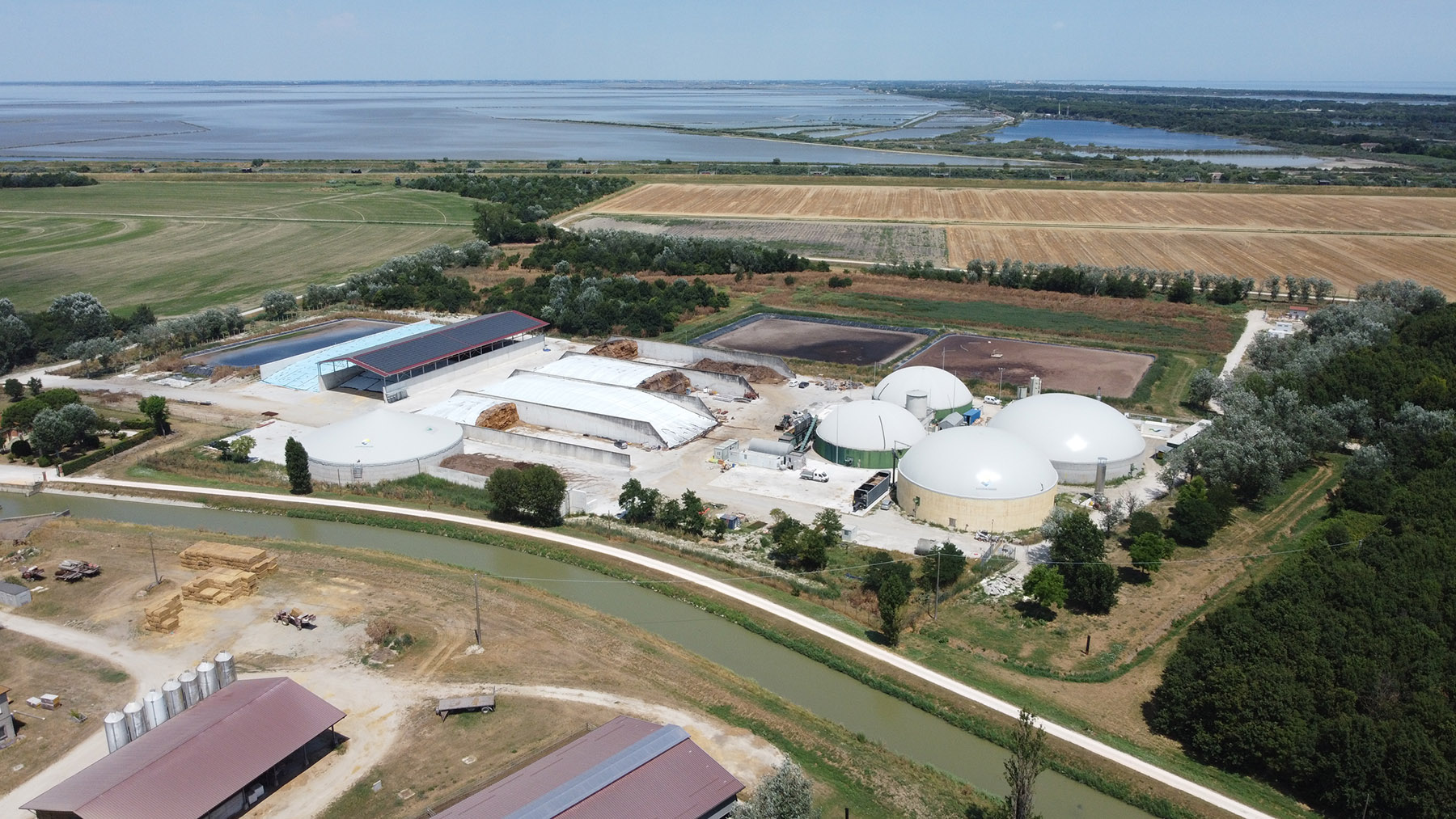
The revamping of the Agrisfera Società Cooperativa Agricola plant in Sant’Alberto di Ravenna has been completed. The project transformed the existing facility into a biomethane plant with a production capacity of 400 Sm³/h. In early July 2026, the first cubic metre of biomethane was injected into the gas grid.
Conversion of the Agrisfera Plant
The Sant’Alberto project involved civil works, plant engineering, automation and systems for managing biomass, digestate and biogas. Corradi & Ghisolfi designed and built the new sections to integrate them with the existing plant and the units dedicated to gas treatment.
The result is a renewed configuration that manages the feedstocks from feeding and anaerobic digestion through to biogas collection and its conversion into biomethane for injection into the gas grid.
New Civil Works
The project required the construction of new reinforced concrete structures, designed according to the plant’s biological and operational requirements. The main works include:
- a new D3 digester measuring 32 metres in diameter and 8 metres in height;
- a storage tank measuring 36 metres in diameter and 6 metres in height;
- a mixing tank measuring 10 metres in diameter and 4 metres in height;
- a concrete pad for the separated solid fraction and a tank for the separated liquid fraction;
- two bunker silos for biomass storage, with walls 4.85 metres high;
- the foundations and provisions required for the new plant components.
Penetron Admix is used in the walls of the digester and storage tank to waterproof and protect the concrete through crystalline technology.
The New Digester and COMBI MAXI 300 Mixing System
The new D3 digester is one of the key sections of the revamping project. The tank features insulation on the bottom and walls, internal protection in areas exposed to biogas, external cladding and a double-membrane gas holder.
Three horizontal COMBI MAXI 300 mixers are installed inside the digester. Their blades generate radial and axial movement of the biomass, helping to distribute feedstocks with a high dry matter content evenly and reduce the formation of surface crusts. Each mixer is driven by a 15 kW geared motor and can operate continuously or according to programmed cycles.
The digester is also equipped with a heating system in direct contact with the biomass. Heat distribution helps maintain the process conditions required for anaerobic digestion.
Biomass Feeding
The new PolyPro100 SE Mega hopper has a capacity of approximately 100 m³ and is designed for feeding substrates and solid feedstocks. The push system and augers transfer the material towards the digester, ensuring continuity and control throughout the feeding process.
The mixing tank, equipped with a vertical mixer, completes the preparation of the substrates before they enter the subsequent process sections.
Storage, Gas Recovery and Digestate Separation
The gas recovery storage tank, measuring 36 metres in diameter, is equipped with a double-membrane gas holder and safety systems for pressure control. Three submersible mixers keep the contents moving and facilitate the operational management of the tank.
The revamping project also includes a new section for separating the solid and liquid fractions of the digestate. The screw separator operates together with dedicated pumps and mixers, allowing the two fractions to be directed to the subsequent storage and agricultural use stages.
New Slurry and Biogas Lines
The piping modifications connect the new digester, pre-storage tanks, storage tanks and separation system. The project includes approximately 300 metres of slurry lines, using pipes suitable for the different above-ground and underground sections.
The biogas line, approximately 250 metres long, connects the biological sections to the treatment system. Gas bridges and condensate recovery devices complete the route of the gas produced before the purification and upgrading stages.
Automation and Centralised Control
The project also included the revamping of the electrical system and automation system. The new supervisory system makes it possible to manage plant equipment, display process parameters, record alarms and access historical data relating to consumption, production and raw material use.
The communication network connects the biological section with the main external systems, including cogeneration, upgrading, the booster and the regulation and metering station. This allows operators to monitor all the information required for plant operation from a single interface.